A five-page document listed the general terms of the US-UK Economic Prosperity Deal (EPD), setting a roadmap for further trade negotiations.2 Under the terms of the EPD, countries are expected to pursue three main objectives:
- Increase the quality and volume of reciprocal trade.
- Remove barriers for US and UK firms to operate, invest and trade in both countries.
- Maintain an enduring economic partnership, built on a shared vision of the challenges facing both economies.
The agreement reduces the US tariff on UK cars from 25% to 10%, for a quota of 100,000 per year.3 This is significant given the US is the largest export destination for UK cars, representing over a quarter of total British car exports. However, the new levy is higher than the 2.5% rate applied to these goods before 2 April.
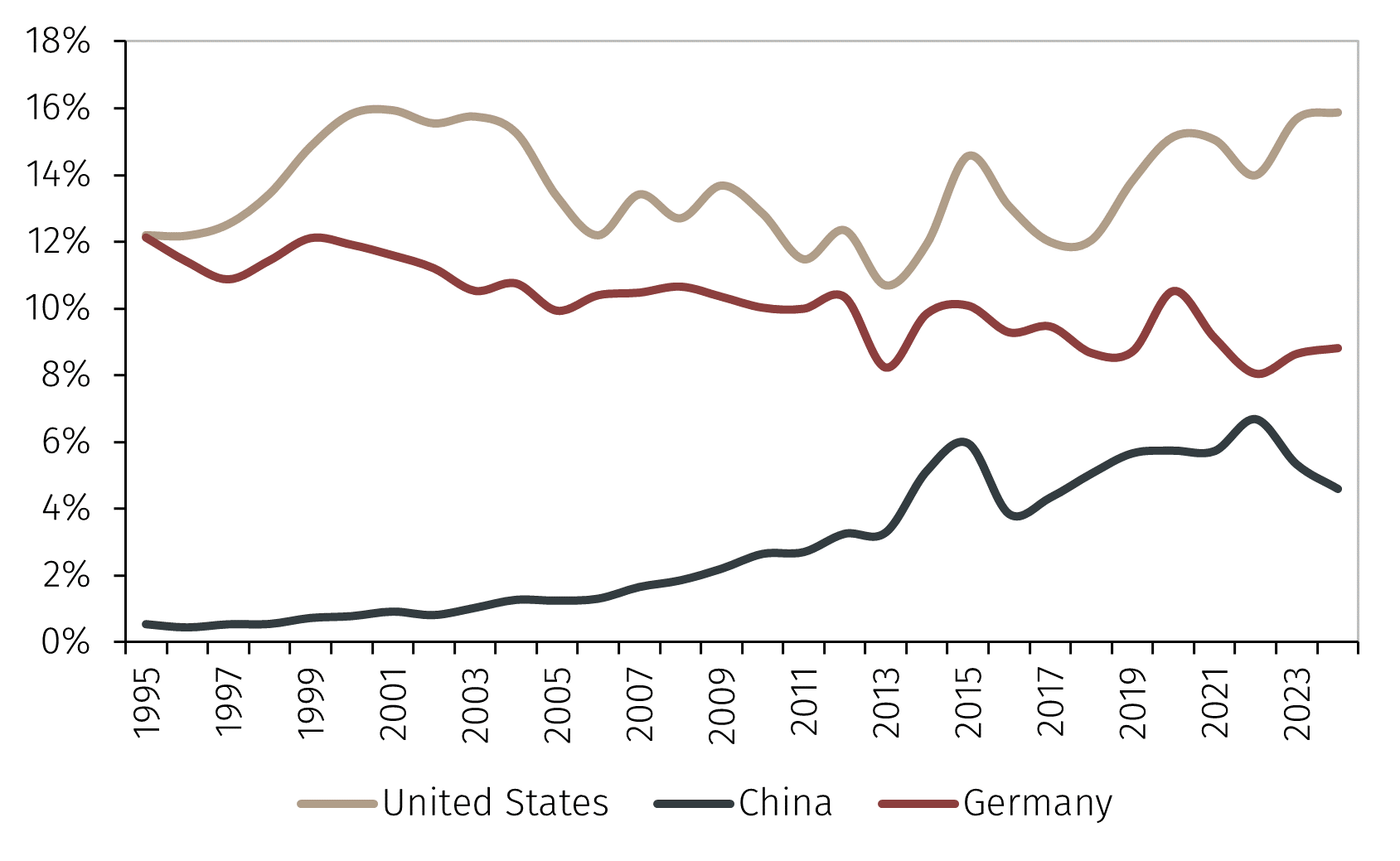
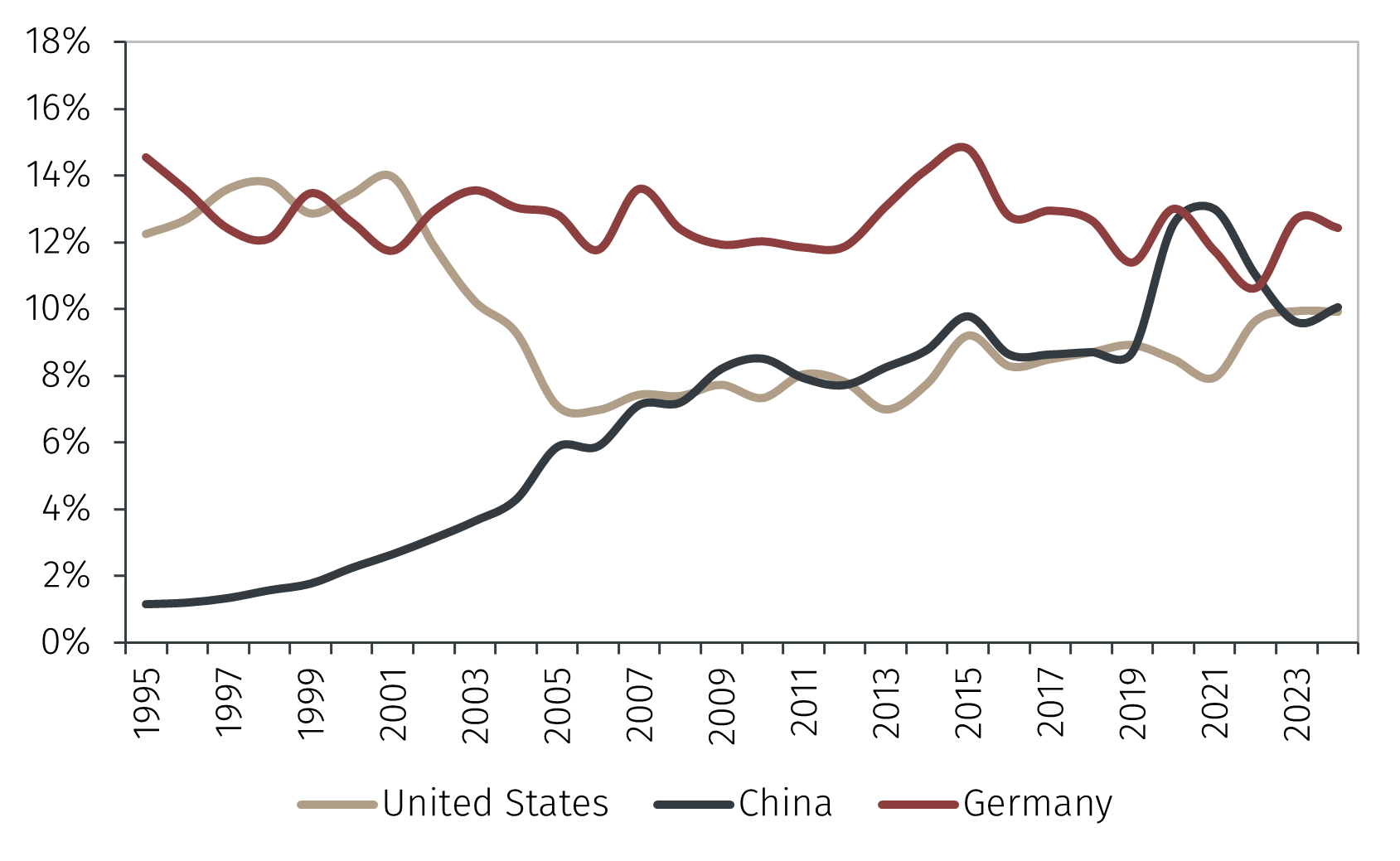
Additionally, the 25% tariffs on UK exports of steel and aluminum, and its derivative products, will be eliminated to secure the US’ demand of these materials. On this matter, the deal conditions the UK to work towards meeting the US’ requirements on supply chain security by addressing the “nature of ownership of relevant production facilities”, in a clear reference to China. This could potentially become a headwind for UK-China relations given the increased importance of China as a source of UK imports, see Chart 1.2.
Finally, the EPD briefly mentions the intention to negotiate preferential treatments on UK pharmaceutical products when entering the US and plans to work on enhancing market access for agricultural products in both markets. It references the intention to negotiate on digital trade provisions, despite limited additional details provided, and strengthening the collaboration on economic security between the two countries.
Implications across both sides of the Atlantic
For the UK, this was the second trade deal announcement in one week, following an agreement with India, which is expected to boost trade between the two countries by £25.5bn a year by 2040. This took three years to finalise and was hailed by UK Prime Minister Starmer as the “biggest and most economically significant” bilateral agreement for the UK since Brexit.4
With the UK government looking to boost economic growth, increased trade openness with key economic partners is welcome news.
So far, the available details of the agreement with the US do not seem to open new bilateral trade opportunities. However, the intention to reduce trade barriers was positively received by the UK corporate sector and is expected to foster further investment. Additionally, Bank of England officials, concerned that trade tariffs could hurt domestic GDP growth and drive inflation higher, will also welcome the start of negotiations.
For the Trump administration, the announcement serves as an example for other trade partners of what can be achieved through negotiations. Against a backdrop of higher tariffs, the US-UK deal will encourage trade officials from other countries to travel to Washington in the hope of agreeing new trade terms with the US, perhaps in exchange for hardened conditions on third parties, including China.
Eighty years ago, US President Truman and UK Prime Minister Churchill had to temper the celebrations, saying that the war had not yet been won, as Japan had not been completely defeated. In the words of President Truman referring to the war against Japan, we can also describe the recent US-UK trade deal announcement as “a victory only half won”.5